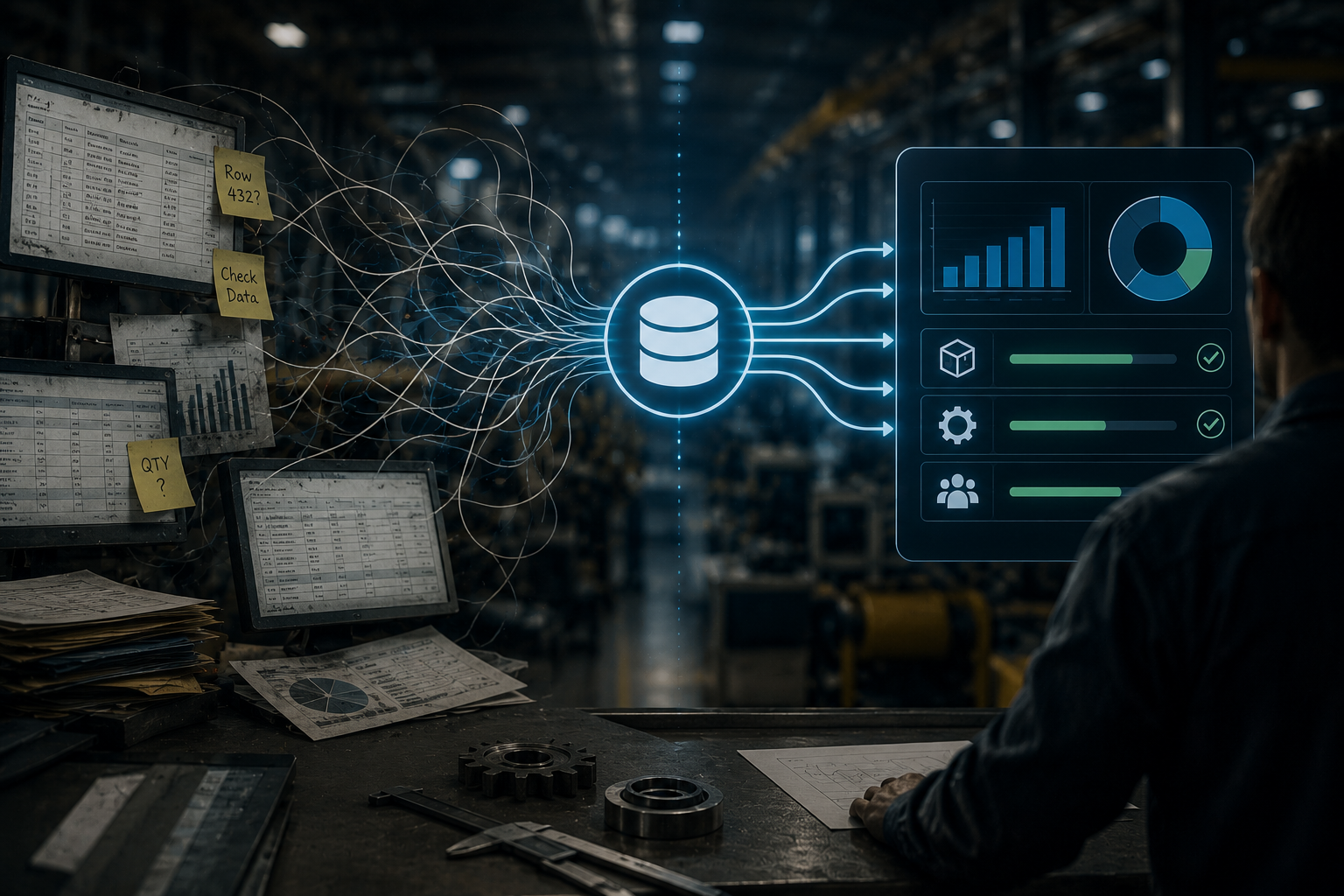
Data Readiness: What It Takes to Put Your Manufacturing Data to Work
Quick Summary Data readiness is the point where your business can trust its data and use it for informed decision-making. It means your systems produce reliable data, your teams can access it, and your processes support ongoing accuracy. For manufacturers and industrial service companies, achieving data readiness requires strong data infrastructure, consistent data management, and clear ownership. Most challenges come from legacy systems, inconsistent data, and disconnected data sources. Who This Is For
Key Takeaways
|
The Hidden Cost of Inconsistent Data
Your operations team pulls a report. The numbers do not match what accounting shows. Someone spends hours tracking down the issue.
This is what poor data quality looks like in practice. Not one major failure, but constant inefficiencies that slow decision-making and reduce confidence.
Business data readiness solves this by creating a data foundation built on data accuracy, data completeness, and reliable data flows. When data readiness ensures consistency across systems, your team can focus on business outcomes instead of troubleshooting.
What Data Readiness Means for Manufacturers
Data readiness means data can be trusted and used effectively within your business context. It includes several key aspects:
- Data quality and data integrity
- Data accessibility and data availability
- Data security and governance
- The underlying data infrastructure that supports data storage and movement
For manufacturers, this translates into clear outcomes:
- Inventory systems reflect actual counts on the floor
- Pricing remains consistent across systems
- Customer records stay aligned across all data sources
- Teams can access relevant data quickly for informed decisions
Being data-ready does not require complex data warehouses or large analytics teams. It requires well-structured data, clean records, and systems that support your strategic objectives.
Why Most Industrial Businesses Struggle with Data Readiness
Research shows that more than half of organizations struggle to turn data into actionable insights. In manufacturing, the causes are consistent.
Disconnected and disparate data sources
Different systems collect data independently. Over time, this creates duplicate records, inconsistent data, and gaps in data availability.
Aging legacy systems
Legacy systems often lack the flexibility needed for modern data capabilities. Without maintenance, data flows break down and data integrity declines.
Lack of ownership and governance
Without a defined data governance framework, no one is accountable for data accuracy or data completeness. This leads to unreliable data and increased compliance risks.
The Core Elements of Data Readiness
Data Quality and Data Integrity
High-quality data is the foundation of all data initiatives. Data accuracy, consistency, and completeness ensure that information remains trustworthy across systems. Without strong data integrity, even the best tools cannot produce meaningful insights.
Data Integration and Data Accessibility
Data integration connects systems so they share consistent data. Accessible data ensures teams can retrieve what they need without delays. Together, these improve operational efficiency and support faster decision-making.
Data Governance and Data Security
A clear data governance framework defines ownership and responsibilities. Appropriate access controls protect sensitive data assets and support regulatory compliance. Strong governance reduces risk while improving trust in your data.
Data Infrastructure and Storage
Your data infrastructure supports how data is collected and used. This includes databases, data lakes, and data warehouses. The goal is not complexity, but a well-structured data environment that scales with your business.
A Practical Data Readiness Checklist
You can identify areas for improvement with a simple data readiness checklist:
- Do you understand your primary data sources and how they connect?
- Is data consistent across systems, including customer and operational records?
- How quickly can your team access reliable data for reporting?
- Who owns data management and ensures data accuracy?
- Are your data flows monitored for issues or inconsistencies?
If these answers are unclear, your organization is not fully data-ready.
Data Readiness for AI and Advanced Analytics
AI adoption has made data readiness a critical component of modern business strategy. Artificial intelligence, machine learning, and predictive maintenance all rely on clean and consistent data.
AI models require large volumes of data, but, more importantly, robust data preparation. Feeding inconsistent data into AI systems leads to inaccurate outputs and missed opportunities.
The same applies to advanced analytics and real-time monitoring. Without reliable data, dashboards cannot deliver valuable insights or support informed decision-making.
Before investing in AI, focus on making data ready. The competitive edge comes from the data foundation, not the tool itself.
Data Readiness Is an Ongoing Process
Achieving data readiness is not a one-time project. It is an ongoing process that evolves with your business.
Data collection continues every day. Systems change. Teams grow. Without continuous monitoring and maintenance, data quality declines.
Embracing data readiness means:
- Monitoring data completeness and accuracy over time
- Updating access controls and governance as systems evolve
- Maintaining metadata management to document changes
- Supporting data capabilities through ongoing improvements
Consistent effort ensures your data remains a strategic asset that supports long-term business outcomes.
Where NorthBuilt Fits In
Many data challenges stem from systems that have not been maintained. Data becomes inconsistent, integrations fail, and reporting loses reliability.
NorthBuilt helps manufacturers and industrial service companies improve data readiness by maintaining custom software, strengthening data integration, and supporting long-term data strategies.
We start by evaluating your current data infrastructure, identifying gaps, and improving how your systems handle data. Then we provide ongoing support to ensure your systems continue to produce reliable data.
Getting Started
Data readiness is about making data work for your business.
Start by understanding your data sources, improving data quality, and aligning your data strategies with your business objectives. Organizations that effectively manage their data gain a competitive advantage through better decision-making and stronger operational efficiency.
If your systems are holding you back, the next step is improving your data foundation so your business can move forward with confidence.