Automation Consulting Services for Manufacturers and Industrial Businesses
|
Quick Summary Who This Is For
Key Takeaways
|
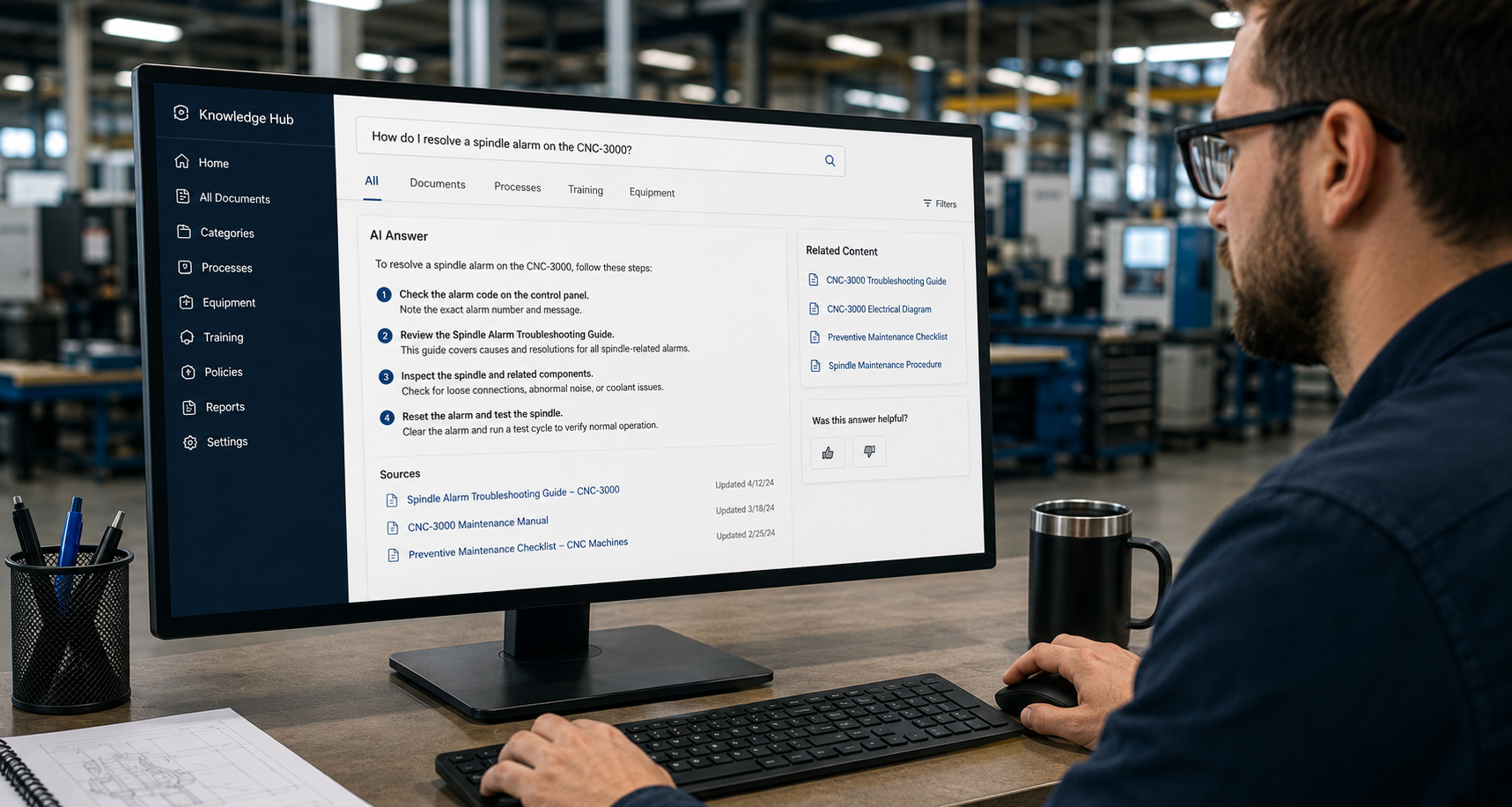
Automation consulting services help you figure out which parts of your business are worth automating, in what order, and with what technology, before anyone touches a line of code. That planning step can determine whether an automation project pays for itself or becomes another piece of software nobody trusts, especially for Midwest manufacturers and industrial businesses running mission-critical systems on tight margins.
Automation has captured a lot of attention lately, and for good reason, though automation on its own isn’t the goal. The goal is fewer manual handoffs, fewer errors, and a team that spends less time on repetitive work and more time on work that needs a person. Getting there takes more than great technology. It requires a process for deciding what to automate, how to build it, and how to keep it running once it’s live.
Here’s what a real automation consulting engagement looks like, what it should deliver at each stage, and what to watch for so your automation efforts fully meet the goals you set out with.
What Automation Consulting Services Actually Cover
A real automation consulting engagement starts by mapping your business processes end to end. That means walking through how work actually moves today, not how it’s supposed to move on paper. Manual handoffs, bottlenecks, and process execution metrics get documented before anyone talks about automation technology. This matters because companies often underestimate how many small manual steps support a process that looks automated from the outside.
Once the current state is clear, a stakeholder alignment workshop brings the right people together to define what success looks like. Processes get scored by ROI and implementation complexity, because a high-value process that takes eighteen months to automate isn’t the same opportunity as a lower-value one you can ship in six weeks. Target service-level agreements (SLAs), the specific performance thresholds an automated process needs to hit, and success metrics come out of this stage, so everyone agrees on what “working” means.
Design comes next. This is where automation consultants select the right intelligent automation technologies, whether that’s robotic process automation, workflow software, artificial intelligence, or a combination. The team designs the end-to-end workflow, defines how exceptions get handled, and specifies how data moves between systems. Skipping this step can leave companies with automation that works for the easy 80 percent of cases and falls apart on the hard 20 percent.
Turning a Roadmap Into Working Automation
A roadmap only matters if it turns into something that runs. A cross-functional automation consultant team, made up of people who understand both technology and operations, builds a phased implementation roadmap with realistic resource estimates and a change management plan for the people whose jobs will change once automation goes live.
Implementation should follow a modular design so pieces can be tested, adjusted, and reused rather than built as one massive system. Automations get integrated with existing systems, then run through a controlled pilot in a single target process before anything scales further. The pilot generates real performance data, while acceptance testing validates the output against the success metrics defined earlier. Teams document defects and create remediation plans for anything that misses the mark.
Once a pilot proves out, the work moves toward standardized deployment pipelines, operational runbooks, and monitoring for automation health. Operations teams get trained on ongoing support so the automation doesn’t depend on the consultants who built it. This staged approach- assess, design, pilot, then scale- separates automation efforts that meet expectations from ones that stall halfway through.
Why Most Automation Efforts Stall Before They Scale
Plenty of automation projects get built and never scale past the pilot. Usually the reason isn’t the technology. It’s governance, security, and ownership questions that never got answered. A defined automation governance model, security controls for bots, secure integrations, and protected credentials all need to exist before automation touches anything connected to customer data or financial systems. Skipping this step to move faster almost always costs more time later.
The other reason automation stalls is measurement. Without tracked ROI metrics, efficiency KPIs, and a quarterly review cadence, nobody can tell whether an automation is still delivering value a year in, or whether it’s quietly drifted out of alignment with how the business actually runs now. Continuous improvement isn’t optional. It’s what keeps an automation program from becoming another piece of infrastructure someone has to babysit.
This is also where a single-person approach to automation breaks down. One developer, whether in-house or freelance, gives you one person’s technology stack and one person’s availability. A team gives you breadth across the technologies your automation opportunities actually require, along with continuity when priorities shift or someone is out. Automation that runs your business shouldn’t depend on one person staying reachable indefinitely.
NorthBuilt’s Approach to Automation Consulting
NorthBuilt has spent over a decade working with Midwest manufacturers whose custom software and automation efforts were built by someone who has since moved on. That experience shapes how we approach automation consulting: we treat it as an ongoing operational commitment, not a one-time project with a handoff date.
Our engagements follow a four-step model. Discovery means understanding your business and your existing systems before recommending anything. Setup gets the project infrastructure in place. Onboarding transitions and tests everything before it goes live. Ongoing support means we’re still there monthly, prioritizing what’s next and keeping automations aligned with how your business actually operates. We work collaboratively with your team at every stage, because automation that nobody on your side understands is automation nobody will trust.
We also bring a full team, not one contractor, covering the technologies most automation projects actually need. That structure protects you from the key-person risk that shows up when a single automation consultant becomes unavailable right when you need a fix. If you’re evaluating automation consulting services and want a partner who sticks around after the pilot works, that’s exactly what NorthBuilt is built for.
Ready to Build Your Automation Roadmap?
If manual processes are costing your team hours every week, NorthBuilt can help you map the right automation opportunities and build a roadmap you can actually execute.
Frequently Asked Questions
What does an automation consultant do?
An automation consultant assesses your current business processes, identifies which ones are worth automating, then designs and helps implement the technology to do it. Good automation consulting decides what to automate before building anything, rather than starting with a tool and looking for a use case.
How much does automation consulting cost?
Cost depends on scope. Many firms structure engagements in phases: an initial process assessment, a design and build phase, and an ongoing support retainer. A phased structure lets you validate a pilot before committing to a full rollout across the business.
How long does it take to see results from automation?
Most automation pilots show measurable results within a few months of going live, since a pilot is scoped around a single process with clear success metrics. Scaling automation across multiple business processes takes longer and depends on implementation complexity and how many systems need integration.
What processes should we automate first?
Start with processes that combine high ROI with lower implementation complexity. Repetitive, high-volume manual work with clear rules, like data entry, order processing, or reporting, is usually a better first target than a process full of exceptions and judgment calls.
Do we need new software to start automating, or can automation work with what we already have?
Automation consulting should work with your existing systems wherever possible. Part of the design phase is specifying how data maps between your current software and any new automation layer, so you’re not ripping out systems that already work just to automate around them.